Quick Guide & Tips on How to Clean Your Artificial Grass
Artificial grass is designed to be low maintenance, but that does not mean it is maintenance free. Over time, debris, dirt, pet waste, and airborne dust can build up on the surface and in the base of the turf. Without proper cleaning, artificial grass can lose its appearance, drainage performance, and freshness.
Whether you are maintaining a backyard lawn, pet area, balcony, or commercial space, knowing how to clean artificial grass properly helps extend its lifespan and keeps it looking and smelling its best. This guide covers everything from routine DIY cleaning to odour control and when it makes sense to hire a professional turf cleaning service.
Seasonal Artificial Grass Cleaning Tips
Spring Cleaning
Spring is the ideal time to give your artificial grass a deeper clean after winter use. Snow melt, tracked debris, and compacted fibres can leave turf looking flat and tired.
Remove leftover debris such as twigs, sand, and gravel that may have accumulated over winter
Rinse the surface thoroughly to flush out fine particles and residue
Brush turf fibres upright to restore their natural appearance
Check drainage performance and address any compacted infill before heavier spring and summer use
For pet owners, focus on removing residue that may have built up when rinsing was less frequent during colder months
Summer Maintenance
During warmer months, artificial grass typically sees more use and odours can become more noticeable, especially in pet friendly areas. Heat can intensify smells if residue or organic debris is allowed to build up.
Rinse turf regularly to keep the surface fresh and reduce odours
Spot clean high use areas more frequently
Brush fibres occasionally to keep them standing upright and improve airflow
Monitor shaded or enclosed areas where moisture may linger longer
Maintain a consistent light cleaning routine to reduce the need for heavier cleaning later in the season
Fall Cleanup
Fall is one of the most important seasons for turf maintenance. Leaves, pine needles, and organic debris can break down quickly if left on the surface, leading to drainage issues and unpleasant smells.
Remove fallen leaves regularly using a blower, broom, or turf friendly rake
Pay close attention to corners, edges, and drainage areas where debris tends to collect
Clear organic material before winter to prevent staining, compaction, and odour issues
A thorough fall cleanup helps prepare your turf for better performance through the winter months
Winter Considerations
Artificial grass performs well in winter and does not require special treatment. Snow can be left to melt naturally, as turf backing and base systems are designed to drain efficiently.
Avoid using metal shovels or sharp tools that could damage turf fibres
Remove branches, gravel, or debris once conditions allow
Use winter as a time to inspect your turf and plan any maintenance or professional cleaning for spring
Minimal winter care helps protect your investment and ensures your turf is ready when warmer weather returns
Why Cleaning Your Artificial Grass Matters
Artificial grass does not grow, but it is still exposed to the same outdoor elements as natural lawns. Over time, dirt, leaves, pollen, pet hair, and organic debris settle into the turf fibres and infill. If this buildup is not addressed, it can restrict drainage, cause fibres to mat down, and lead to lingering odours, especially in high use or pet friendly areas.
Regular cleaning helps preserve both the appearance and performance of your artificial grass. Keeping the surface clear allows water to drain properly, helps turf fibres remain upright, and prevents organic material from breaking down within the turf system. This is especially important in Canadian climates, where seasonal changes introduce snow melt, rain, falling leaves, and spring pollen throughout the year.
Regular cleaning helps:
Maintain proper drainage and prevent pooling
Stop odours from developing or lingering
Keep turf fibres upright and natural looking
Extend the lifespan of your artificial grass
Create a cleaner, more comfortable surface for pets and people
By staying on top of routine maintenance, turf owners can avoid deeper issues and keep their artificial grass looking and performing the way it was designed to.
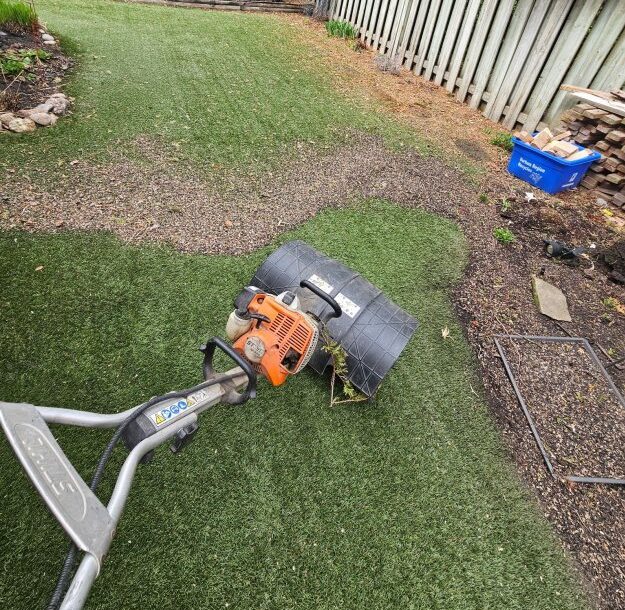
Power Brooming Artificial Grass
Power brooming is one of the most effective ways to refresh artificial grass and restore its natural appearance. This process lifts flattened turf fibres, redistributes infill evenly, and helps release dirt, pet hair, and fine debris trapped below the surface. Regular power brooming improves drainage, reduces compaction, and keeps the turf looking full and upright, especially in high traffic or pet friendly areas.
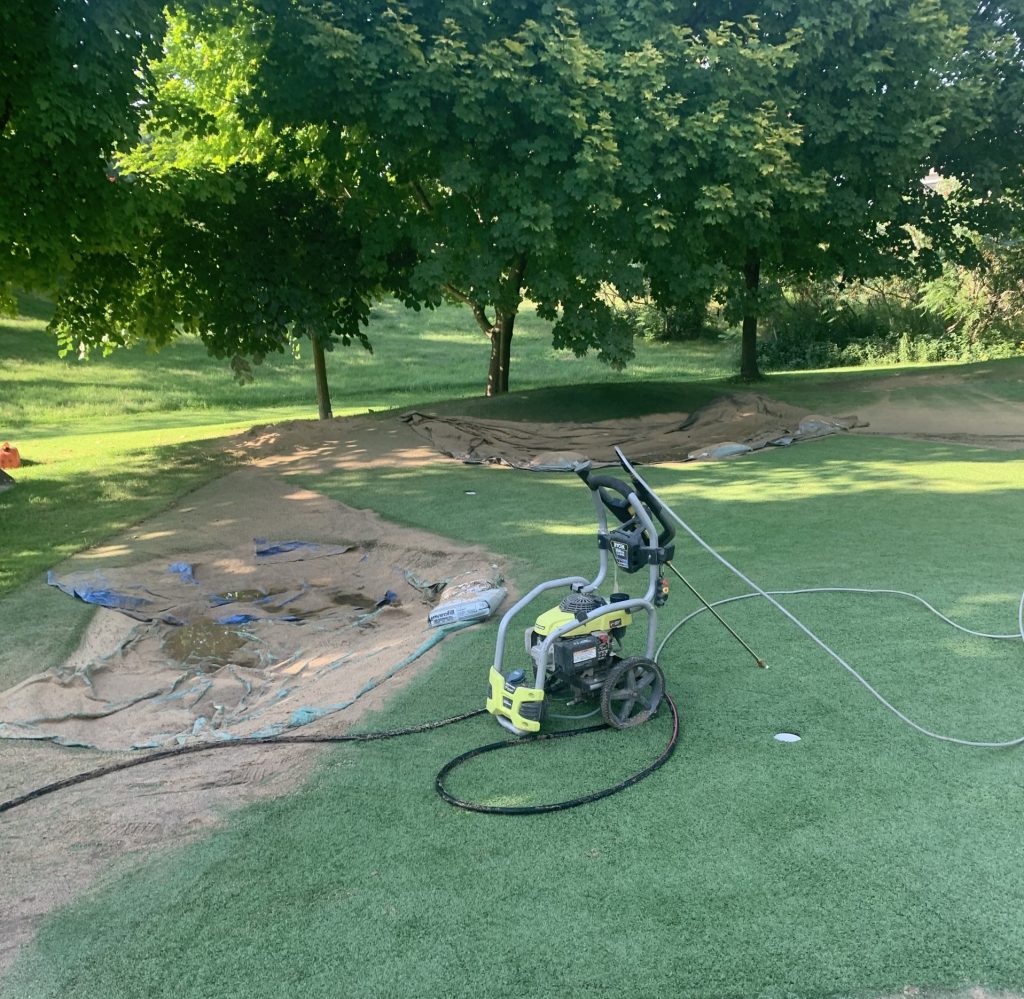
Power Washing Artificial Grass
Power washing is a useful method for deep cleaning artificial grass when dirt, debris, or residue has built up below the surface. When performed using low pressure and turf safe techniques, it helps flush out fine particles, rinse away contaminants, and refresh the turf system without harming the fibres or backing. Proper power washing improves drainage performance, supports odour control, and restores overall cleanliness.
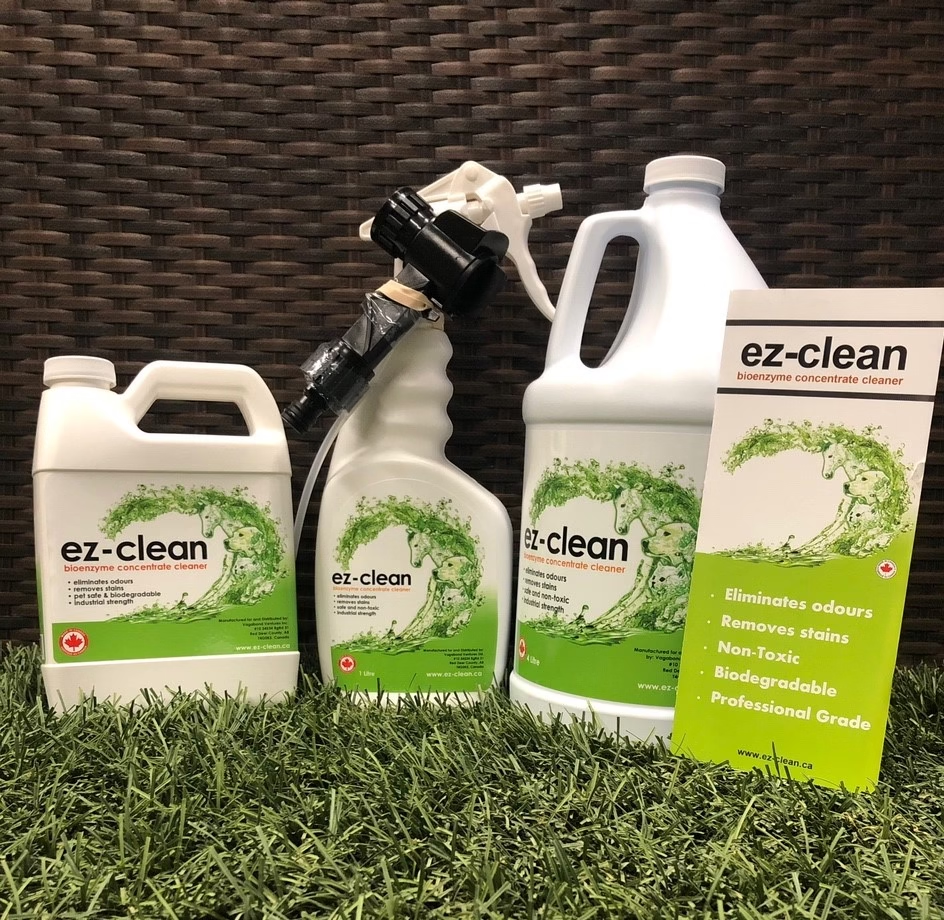
Cleaning Agents & Deodorizers
Using the right turf cleaning products is essential for maintaining artificial grass without damaging the fibres or backing. Turf safe, bio enzyme based cleaners are designed to break down odour causing bacteria, remove organic residue, and neutralize smells rather than mask them. These cleaners are especially effective in pet areas and can be used as part of routine maintenance or during deeper seasonal cleaning.
Benefits of Professional Artificial Grass Cleaning
While regular DIY maintenance goes a long way, professional artificial grass cleaning provides a deeper level of care that is difficult to achieve with household tools alone. It is especially valuable for high use areas, pet friendly spaces, and turf that has not been serviced in some time.
Hiring professionals offers benefits such as:
Deeper removal of embedded debris
Professional equipment lifts and removes fine dirt, organic material, and pet hair that settles below the surface and around the infill.More effective odour neutralization
Commercial grade, turf safe cleaners break down odour causing bacteria rather than masking smells, making a noticeable difference in pet areas.Restoration of turf appearance
Power brushing helps lift flattened fibres, redistribute infill, and restore the turf’s natural, upright look.Improved drainage performance
Removing compacted debris and refreshing infill allows water and urine to drain more efficiently through the turf system.Reduced risk of turf damage
Professional cleaning uses the correct pressure, tools, and products to clean thoroughly without damaging turf fibres or backing.
Professional cleaning is often scheduled once or twice per year to complement routine DIY maintenance, particularly after winter or during periods of heavy use.
Durham Artificial Grass offers dedicated turf maintenance, cleaning, and repair services designed to extend the life of your installation and keep it performing as intended. Whether your turf needs a seasonal refresh or a deeper clean to address odours and drainage issues, our team provides experienced, turf specific care.
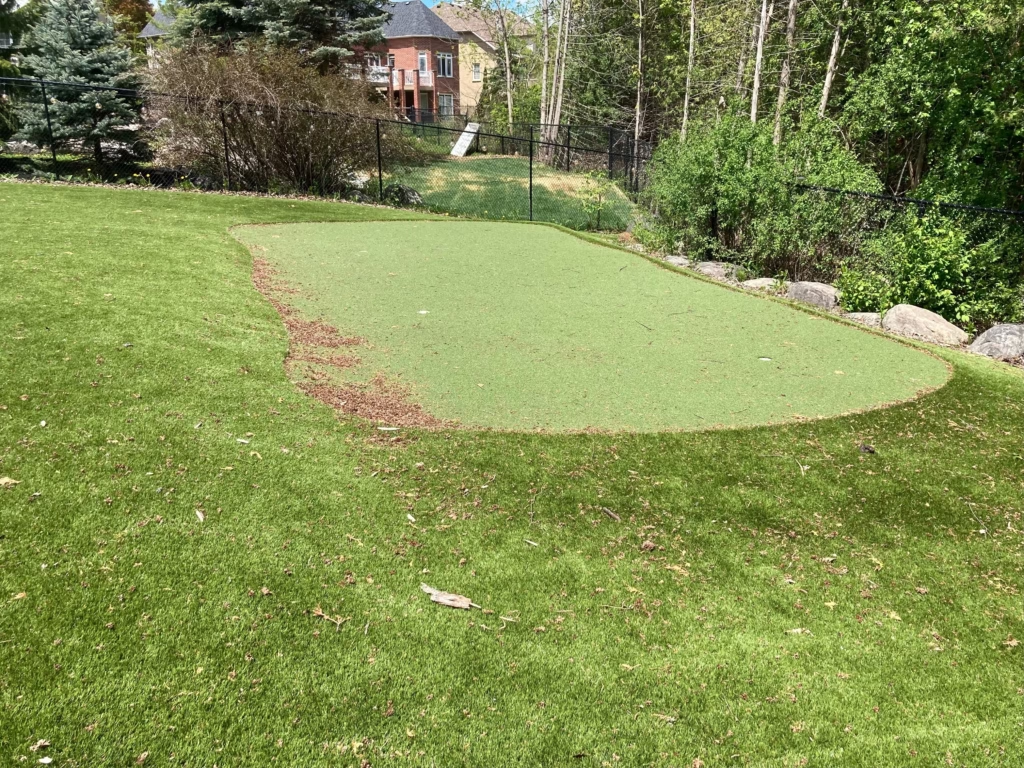
BEFORE – Professional Cleaning
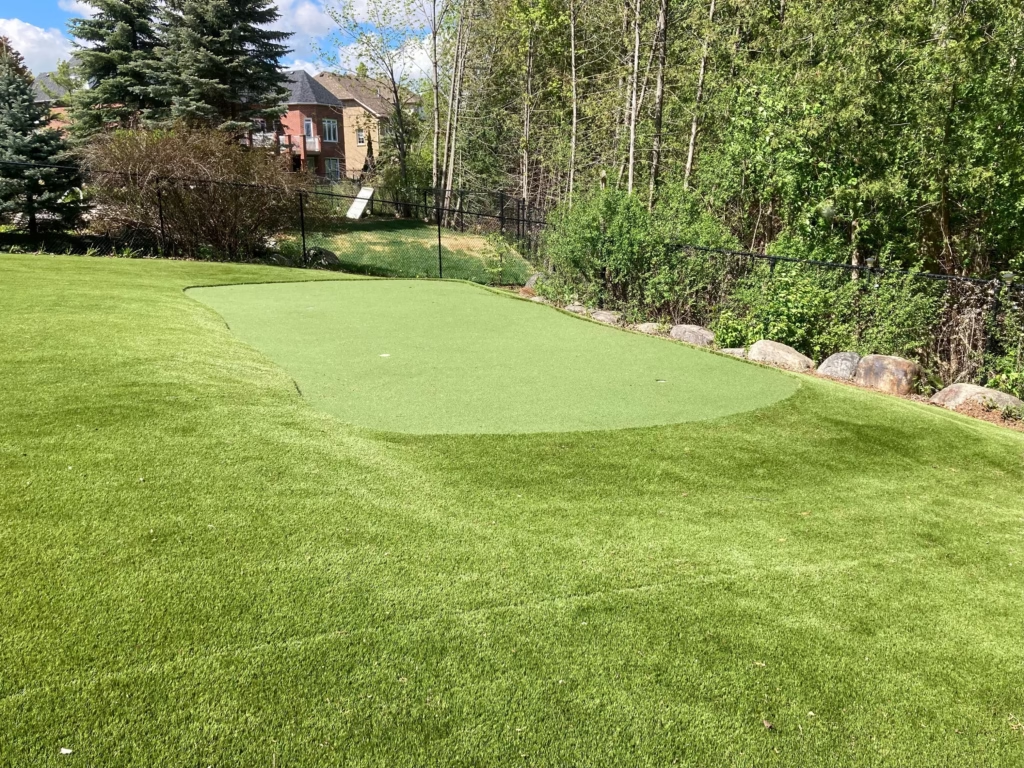
AFTER – Professional Cleaning
When Cleaning Turf Yourself Is Enough
DIY cleaning is often all that is needed to keep artificial grass looking good and performing well, especially with consistent upkeep. Most homeowners successfully maintain their turf with a simple routine and the right products.
DIY cleaning works well when:
Odours are mild or only occasional
Debris buildup is light and easy to remove
The turf drains properly after rain or rinsing
The area is relatively small or lightly used
Turf fibres remain upright with regular brushing
With routine debris removal, periodic rinsing, and occasional use of turf safe cleaners, artificial grass can stay clean, fresh, and functional. For homeowners who stay on top of maintenance, DIY cleaning is a cost effective and practical solution.
When to Hire a Professional Artificial Grass Cleaning Service
There are times when routine cleaning is no longer enough and professional service becomes the better option. This is especially true for high use areas or turf that has not been deeply cleaned in a while.
Professional cleaning services are helpful when:
Odours persist even with regular rinsing
Pet areas experience heavy daily use
Infill has become compacted or uneven
Drainage performance has noticeably declined
Turf fibres remain flattened despite brushing
Dirt and debris are trapped below the surface
Professional turf cleaning typically includes power brushing, deep rinsing, infill rejuvenation, and the use of commercial grade cleaners designed specifically for artificial grass systems. These services restore drainage, improve appearance, and help extend the life of the turf.
Final Thoughts on How to Clean Artificial Grass
Artificial grass is designed to make life easier, but like any surface, it performs best when cared for properly. Regular cleaning plays a key role in maintaining not just how your turf looks, but how it functions day to day. Removing debris, managing odours, and keeping fibres upright all help ensure proper drainage and long term durability, especially in high use or pet friendly spaces.
Whether you prefer to handle routine cleaning yourself or bring in professionals for deeper seasonal maintenance, having the right approach makes a noticeable difference. Consistent care helps protect your investment, prevents small issues from becoming bigger problems, and keeps both outdoor and indoor turf spaces comfortable and inviting year round.
With the right cleaning methods and occasional professional support when needed, artificial grass remains a clean, durable, and reliable surface you can enjoy for many years to come.